Biomimetic Dentistry
Our team of dentists at True Dentistry are extensively trained in biomimetic dentistry and utilize these approaches to provide patients with conservative, preventive treatments that maintain natural tooth structure, enhance tooth strength, and address a variety of dental health and cosmetic concerns. Our doctors understand the incredible benefits that biomimetic dentistry provides their patients and are dedicated to performing these treatments using the latest techniques and state-of-the-art materials.
To learn more about biomimetic dentistry, we invite you to explore the informative sections provided below:
Quick Facts
“Excellent staff, friendly, clean, state-of-the-art office, I highly recommend putting your dental needs in the care of true dentistry!”

What Are the Benefits of Biomimetic Dentistry?
Biomimetic dentistry focuses on preserving as much natural tooth structure as possible while restoring strength, function, and aesthetics. By closely mimicking the natural properties of enamel and dentin, biomimetic treatments can help teeth flex and function more naturally, reducing the risk of cracks and fractures. This approach often results in longer-lasting restorations, improved comfort, and a more natural appearance. Since it emphasizes minimally invasive techniques and strong bonding materials, biomimetic dentistry can also support long-term oral health and reduce the need for more extensive dental procedures in the future.
Who Is a Candidate for Biomimetic Dentistry?
Biomimetic dentistry may be a good option for patients who want to preserve as much of their natural tooth structure as possible. Candidates often include individuals with cracked, worn, or decayed teeth who need restorations but want a more conservative approach. It can also benefit patients seeking metal-free, natural-looking dental work or those who have experienced failure with traditional restorations.
A thorough examination with one of our dentists can help determine whether biomimetic techniques are appropriate based on the condition of your teeth, bite alignment, and overall oral health.
How Does Biomimetic Dentistry Work?
The principles of biomimetic dentistry can be applied at any age to advance and preserve the natural health and structure of teeth. The diagram below demonstrates which anti-aging biomimetic dentistry interventions may be recommended at various life-stages to break the typical degenerative dental cycle.
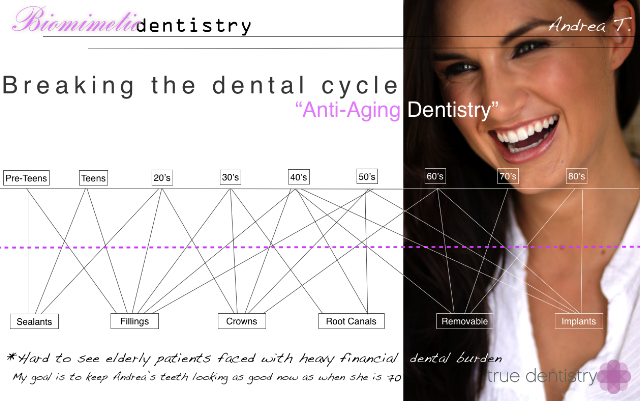
Utilizing conservative techniques to save as much as the original teeth as possible, biomimetic dentistry allows our dentists at True Dentistry to treat vulnerable, decayed, fractured, and weak teeth while working to save them from new problems developing later.
What Are My Biomimetic Treatment Options?
With treatments such as inlays and onlays, modern adhesives, and bonding techniques, tooth structure can be saved without reliance on more complex restorative dentistry treatments. Biomimetic dental techniques can result in less drilling, less need for root canal therapy, conservation of natural teeth, fewer cavities, and fewer dental treatments.

What Materials Are Used for Biomimetic Dentistry?
Biomimetic dentistry uses advanced, tooth-colored materials designed to closely replicate natural enamel and dentin. Common materials include composite resins, ceramic restorations, and high-strength bonding agents that create a durable seal between the tooth and restoration. These materials are often selected for their ability to flex and function like natural teeth, helping reduce stress and the risk of fractures while providing a natural-looking, aesthetic appearance.
What Is the Difference Between Biomimetic and Traditional Dentistry?
The main difference between biomimetic and traditional dentistry lies in how teeth are restored and preserved. Biomimetic dentistry focuses on conserving as much natural tooth structure as possible while using materials that closely mimic the strength, flexibility, and function of natural enamel and dentin. This approach generally relies on advanced bonding techniques to help teeth function more naturally and reduce the risk of fractures.
Traditional dentistry often removes more tooth structure to place restorations such as porcelain crowns or dental fillings. While effective, traditional methods may place more stress on the remaining tooth over time, whereas biomimetic dentistry emphasizes minimally invasive care and long-term tooth preservation.
Contact True Dentistry
If you would like to learn more about biomimetic dentistry, or if you would like to schedule a consultation with our dentists, please contact True Dentistry.